


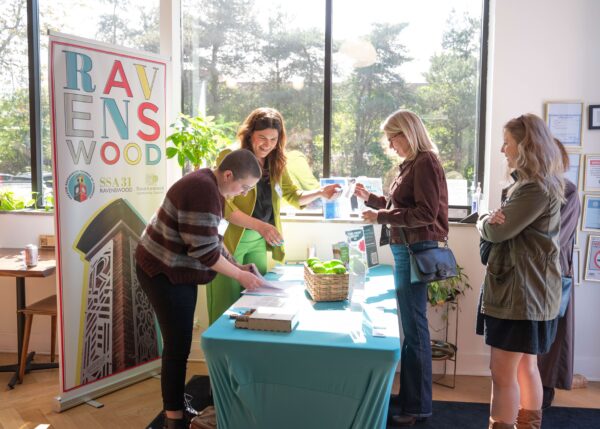
 Be a part of the GRCC community! GRCC members get access to expert marketing support, networking opportunities & resources, members-only discounts, and more.
  Special Service Area #31 – Servicing areas on Clark, Damen, Lawrence, Montrose, Wilson and along the Ravenswood corridor.
If you know something about Ravenswood history, you likely know that our quaint neighborhood was a nucleus of manufacturing and industry in 19th and 20th centuries. Comprising a 78-acre stretch of Ravenswood Ave along the ivy-walled Metra tracks, the historic Ravenswood Industrial Corridor is a cultural landmark and a reminder of the industry boom that employed thousands and put our city on the map as a force to be reckoned with.
Today, Ravenswood remains one of the north side’s most prolific manufacturing hubs. While our local makers & manufacturers vary vastly across industry, age, and technology, each of them have the distinct honor of carrying on a legacy and a tradition over 150 years in the making. October is National Manufacturing Month, and we’re so excited to celebrate the things that are “Made in Ravenswood”, from automotive parts to your favorite fall beer.
Over the past few weeks, we had the pleasure of sitting down with several hardworking manufacturers around the neighborhood to hear their stories, meet their teams, and learn more about what it’s like for something to be “Made in Ravenswood”.
Over 150 years, manufacturing still has a significant presence in the City of Chicago. Industrial business makes up nearly 13% of Chicago’s economy, with about 72.5K manufacturing jobs in the city. We’re incredibly proud to be able to support the makers that call our neighborhood home. This month, we invite you to explore what surprising goods and commodities are made every day in Ravenswood, maybe just a few blocks from your front door.
Accurate Products
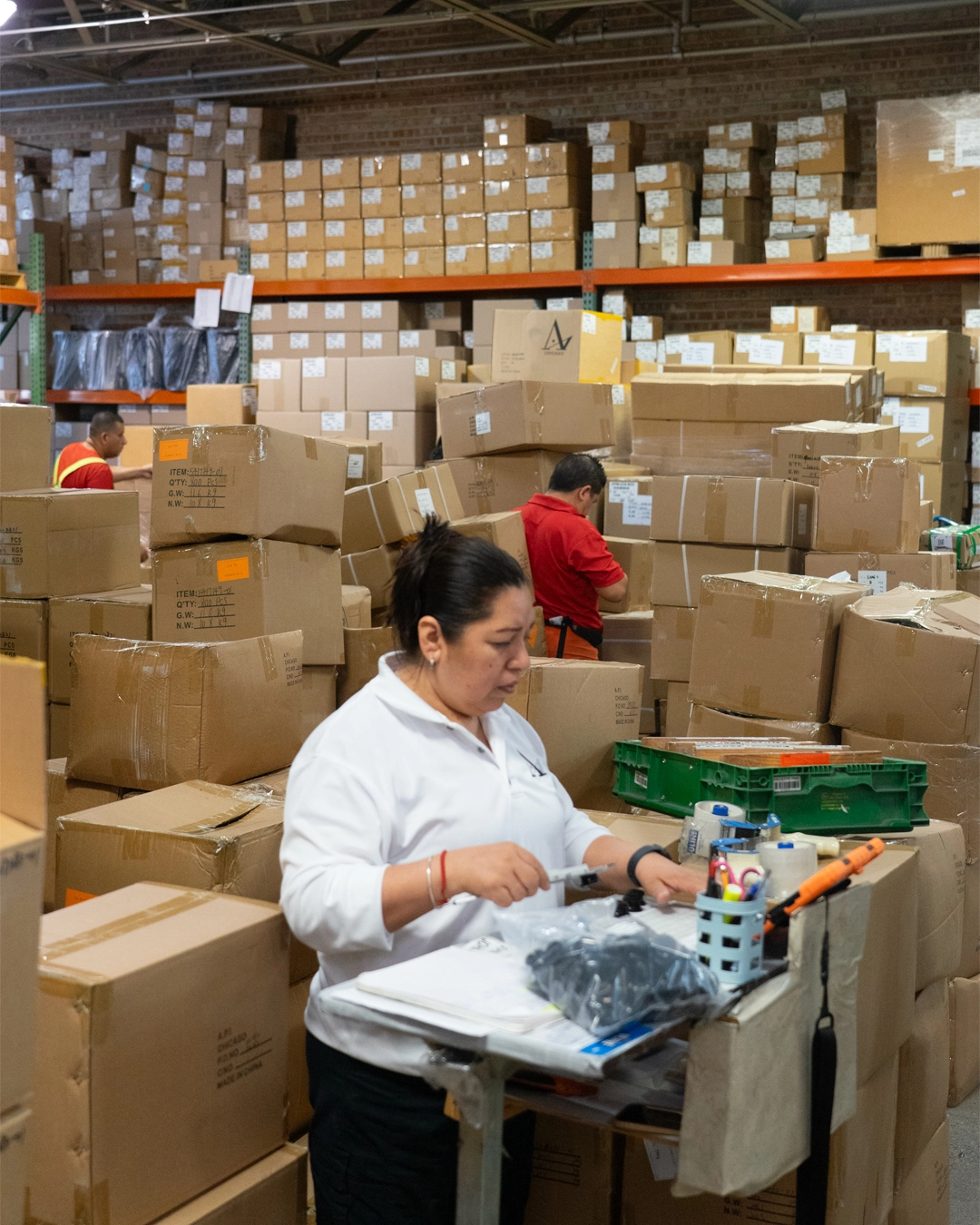
Accurate Products, our first stop, is a paradigm of made-in-Chicago manufacturing. Everything is in motion when we arrive early in the morning. Dozens of employees work in a rhythm on the shop floor; a new shipment, or “container” has arrived, bearing hundreds of boxes of custom parts. Some employees unpack boxes; some measure and test the parts; some carry clipboards, navigating the floor and accounting its contents with ease. This container is one of roughly 200 they’ll receive this year of custom parts manufactured offshore—an enormous quantity, enough that they’ve had to expand twice into neighboring spaces to manage the sheer volume of their inventory.
Learn more at accurate-prod.com
For 24 years, owner Graham Satherlie has overseen this harmonious ensemble. When his father’s uncle started the company in 1948, Accurate Products was a smaller operation focused on domestic production only; when Graham took over, he grew Accurate Products into an industry giant, collecting key contracts and awards from the likes of John Deere and McMaster-Carr. Accurate Products supplies mainly to OEMs, or Original Equipment Manufacturers, and their rubber and plastic products vary broadly by function and design. In short, they make the bits and pieces that, though widely unacknowledged by the public, help make consumer products operate smoothly, safely, and efficiently. (Graham notes with a chuckle that their parts are most often used in what he calls “big boy toys” — ATVs, tractors, and the like.)
Accurate Products has carved out such an impressive place for itself in the global market that the company has managed to weather the biggest storms of the past few decades, such as the COVID-19 pandemic, relatively unscathed. But it’s more than business acumen that keeps this system running as smoothly as it does. Accurate Products is a family business at its core. Graham details his commitment to creating a welcoming and supportive environment for employees, many of whom have been with the company for decades. It’s not difficult to understand why Accurate Products has stood the test of time, still in its original spot in the Ravenswood Industrial Corridor after nearly 80 years of history.
Manifold
It’s not very often you get to step into a space like Manifold. Their shop is bigger than it looks on the outside, and everywhere you look metal is doing something it doesn’t normally do. Here, steel ripples and aluminum drapes. It’s something of a wonderland; the space is industrial, filled with equipment and welding helmets, but the product seems to have taken on a mind of its own.
Learn more at manifoldchicago.com
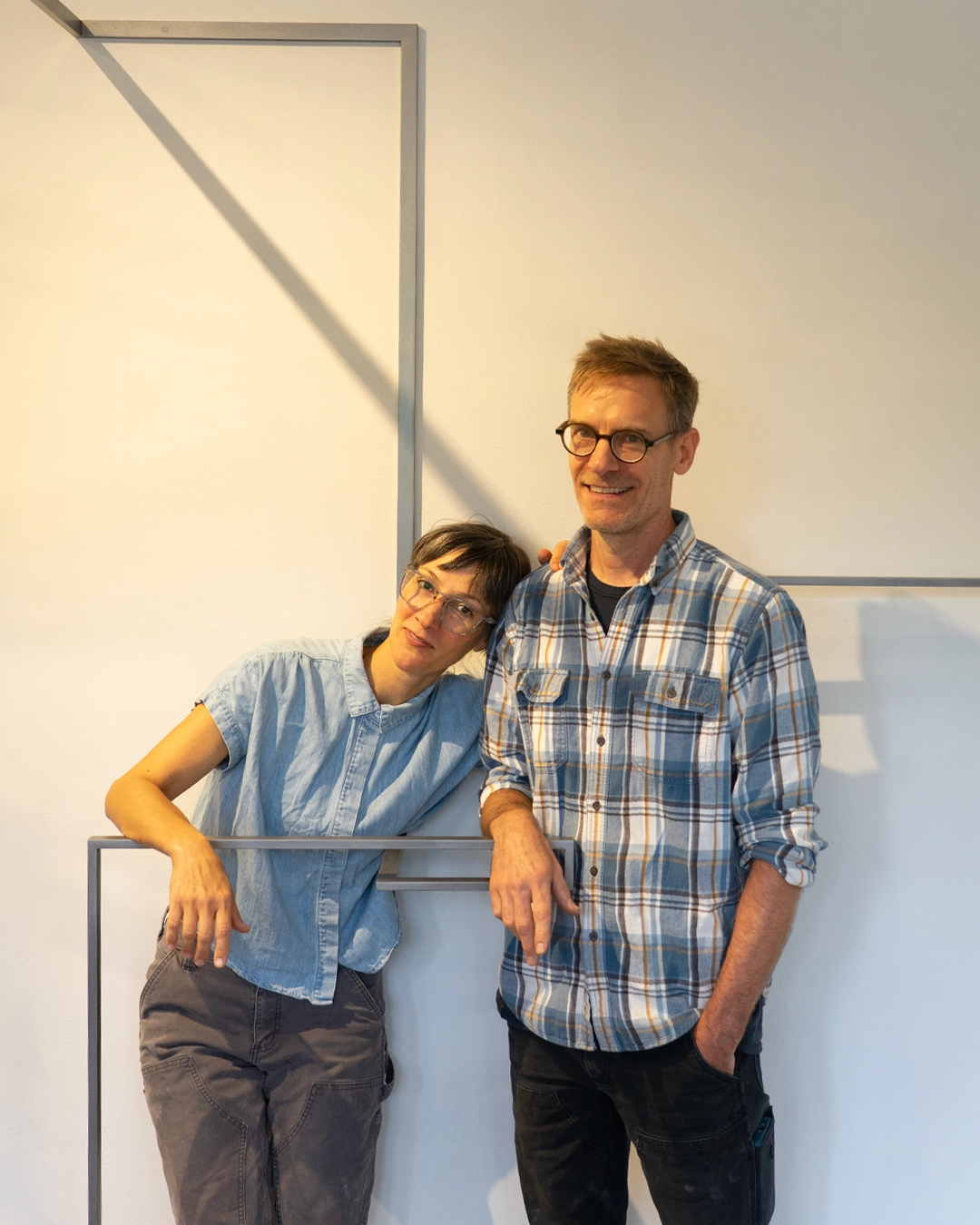
In reality, this metal takes on the minds of owners Ross and Elizabeth Fiersten, Ravenswood’s friendly neighborhood metal fabricators. Both hail from the west coast originally and found their way to metal through separate means. For Elizabeth, it was through jewelry-making classes at school in New Mexico; Ross, an architecture major, found his passion in larger, more structural metalwork pieces. But why metal as a medium? Ross describes the unique satisfaction of working with a material normally thought of as industrial and rigid; the beauty of elemental subversion and what he calls “happy accidents.”
Over nearly three decades, the two have designed and produced an array of metal furniture, sculpture, and accessories for customers across the nation, including acclaimed sculptor and performance artist Nick Cave. One recent project brought them to recently opened Obama Center in Hyde Park to do patina work on some of the sculpture installations. There’s always something new keeping them busy in the studio, and every project brings its own challenges and rewards.
Having previously worked out of a smaller walk-up space in another neighborhood, Ross and Elizabeth describe their current shop on Ravenswood Ave – which they discovered during the Ravenswood ArtWalk – as a breath of fresh air. “As a metalworker, it’s astounding that it’s even possible to be in such a beautiful neighborhood, near other makers, restaurants, and transit options.” It’s the sort of place where you don’t need to leave to find what you’re looking for; moreover, in the case of Manifold, it’s a neighborhood bursting with the kind of creative inspiration driving their business.
If it sounds like something you’d like to try for yourself, we felt much the same way. You may very well get the chance, after all: Ross and Elizabeth tease the possibility of hosting workshops in the future, and are looking for a dedicated tenant to lease space in their studio and use their equipment for projects. Does that sound like it could be you? Drop them a line at info@manifoldchicago.com!
Dovetail Brewery
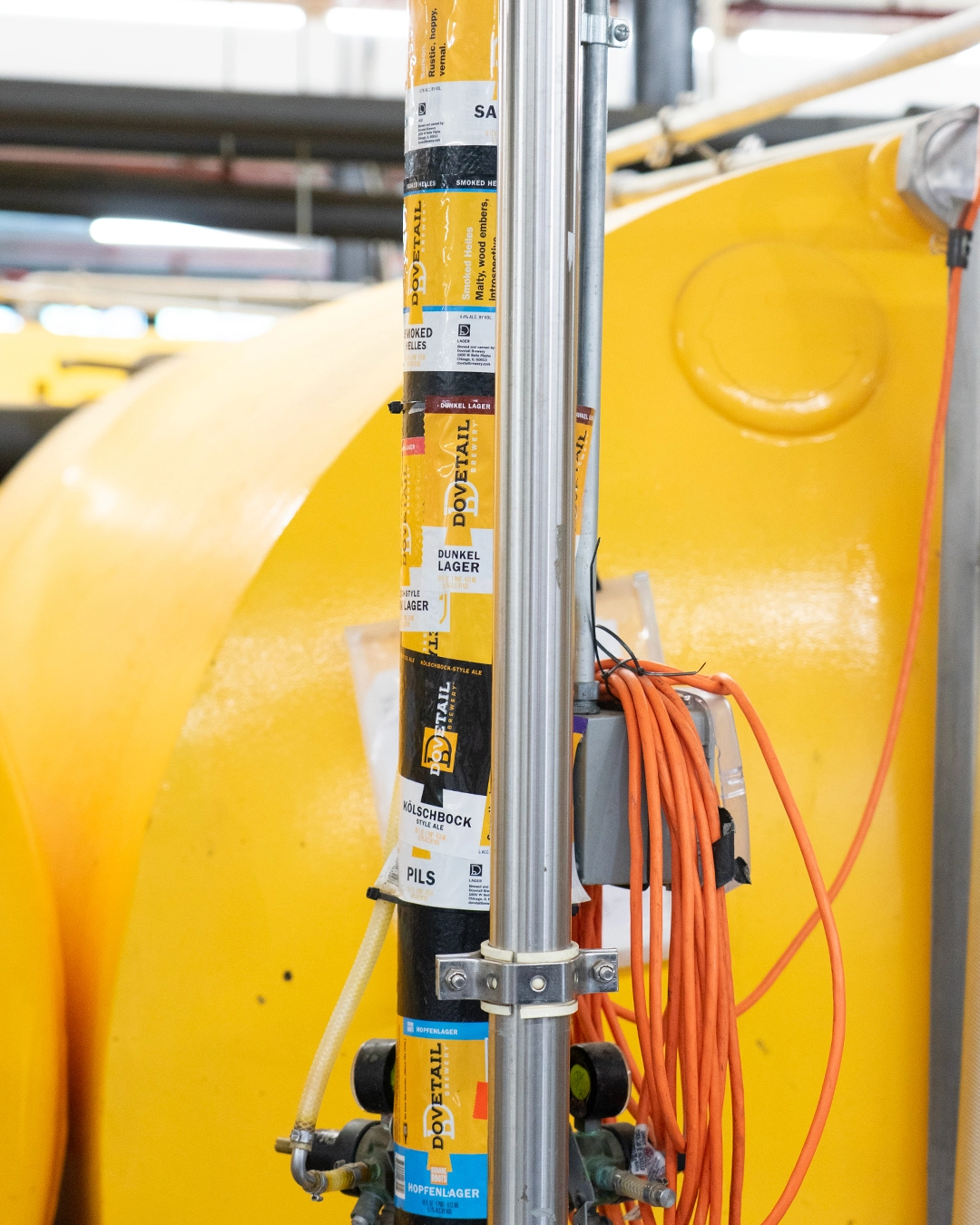
It’s been ten years since Dovetail Brewery opened its doors to the public, then at the rip-roaring height of the craft beer explosion that gripped the nation by its tap handle in the mid-2010s. Their recent tenth birthday celebration attracted Chicagoans from far and wide, signaling good health amid a time of uncertainty in the craft beer industry. It’s unsurprising: Dovetail, a staple of Ravenswood’s Malt Row district, offers something unique in its selection of finely made traditional European styles, TV-less taproom, and expansive community programming.
Learn more at dovetailbrewery.com
We sat down with co-owner Hagen Dost in Dovetail’s Barrel Loft to talk more about the biggest challenges, successes, and takeaways of the past decade. When asked to expand on how brewing is a form of modern, urban manufacturing, Hagen puts it succinctly: “We buy raw materials and convert them into a finished product.”
For the unconvinced, we recommend one of Dovetail’s lauded brewery tours. Just beyond the taproom, one finds a production floor not unlike the kind you would expect to find in a “traditional” factory; the brewing process is carried out by experts with scientific precision. Hagen – a former engineer – puts it best, remarking that the brewery itself is a machine made of smaller machines. “We picked this building to make the kind of beer we want to make.” Dovetail has always been driven by purpose, something Hagen identifies as one of the business’ biggest drivers of success.
Dovetail’s purpose goes beyond producing quality beer. From the beginning, Hagen and his team have seen the value in community involvement, industry leadership, and advocacy. Together with their neighbors at Begyle Brewing, Dovetail hosts two annual festivals that serve as critical fundraisers for The Friendship Center – a local food pantry based in Lincoln Square. This fall, donations at their Oktoberfestiversary event will help the breweries reach a total of over 4.5 million meals since their collaboration began roughly a decade ago. Among many other community connections, Dovetail is also a frequent supporter for the Pink Boots Society, an organization that supports women and non-binary individuals in the fermented and alcoholic beverage industry.
Collaborations like these are what we love about Dovetail. They are rooted in their community, they take care of their neighbors and employees, and they take pride in the product they manufacture. The beer is pretty tasty, too.
Jane Addams Resource Corporation
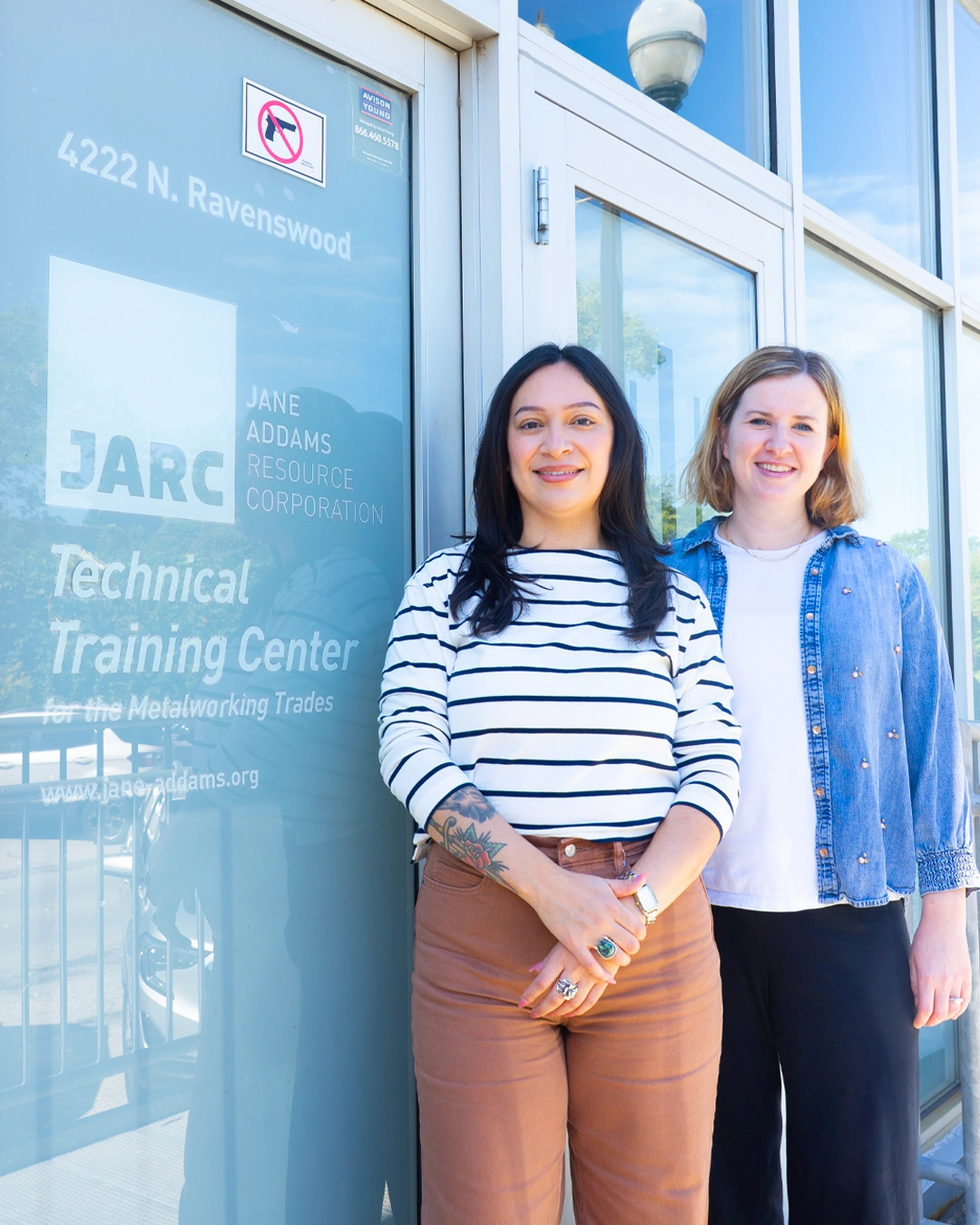
“You’re going to walk through that door alone, but you’re going to leave as part of a community that will support you through the rest of your career.” That’s what Mari Zapata, Director of Training Services at Jane Addams Resource Corporation (JARC), wants prospective applicants to know about being a JARC trainee.
Learn more at jarctraining.com
JARC, founded in 1985 as an offshoot of the famous Jane Addams Hull House, is one of the hardest-working, highest-impact nonprofits you may never have heard of. JARC’s first training center is still here in the Ravenswood Industrial Corridor, but their operations have grown into the Austin neighborhood in the past decade with the addition of a new training center and a tenancy in the multi-use ASPIRE Center, which offers multiple services to community members in need. In just the past few years, JARC has opened training centers in Rhode Island and Baltimore, with an eye on establishing more outposts in America’s underserved industrial hubs.
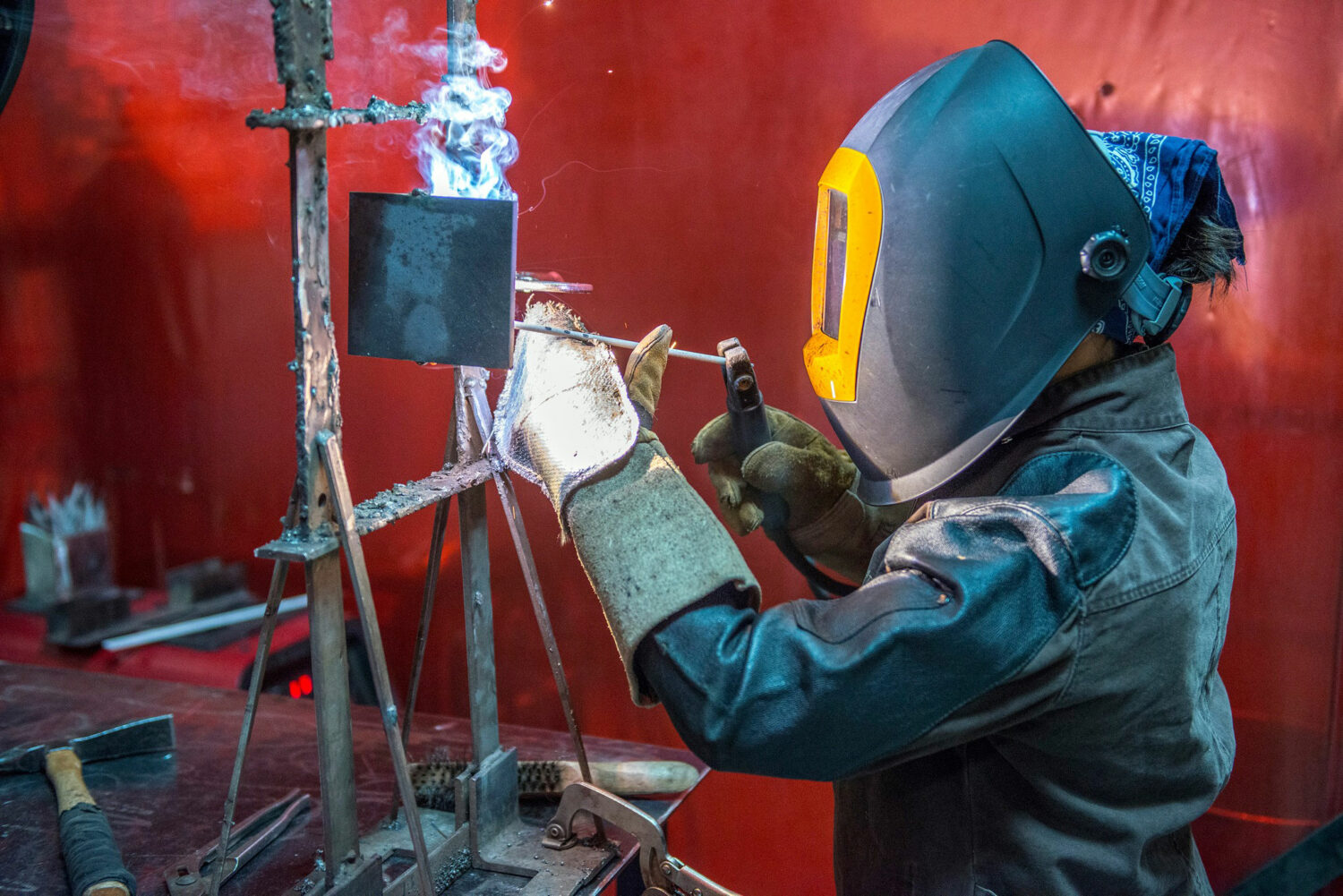
For over 40 years, JARC has provided the hands-on training, career coaching, and supportive services to help low-income individuals from all walks of life gain the skills needed for a career in manufacturing and skilled trades. Think of it as a full-service ecosystem: in addition to offering no-cost Welding and CNC (Computer Numerical Control) Training Programs to eligible applicants, JARC also offers an Adult Learners Program and one-on-one tutoring, dedicated training on soft skills like job readiness, and financial assistance to trainees in need. Mari shares an anecdote about a trainee who paused her participation in the program to give birth – JARC stepped in to provide financial assistance for childcare support. In another instance, JARC helped an underemployed trainee pay rent during their time in the program.
JARC is constantly evolving to keep up with the evolving industrial landscape. Similarly, JARC’s community is evolving: Mari reports that young adults and women are joining the program at higher rates than ever before. It makes sense: at a time when the traditional job market is unwelcoming, and low-income jobseekers struggle to make ends meet, there’s never been a better time to consider a career in manufacturing/skilled trades, which offer stability, solid starting wages, and ample opportunities for growth.
Whether you’re just getting started in your career or looking to make a switch, applying to JARC’s training program could be the first step in the journey of a lifetime. They’ll be with you every step of the way.
Phoenix Bean
Phoenix Bean offers a Chicago-made example of how a longtime neighborhood manufacturer can grow while staying rooted in local food traditions. Chicago’s oldest-running tofu factory began in the 1980s as a supplier to Chinese restaurants and Asian grocery stores. Today, its tofu reaches a much broader audience, from high school cafeterias and Whole Foods to Sweetgreen, meal kits and plant-based food brands. Learn more at phoenixbean.com
Jenny Yang became a customer of Phoenix Bean when its factory was just two blocks from her home. After five years of buying its tofu, she learned the owner planned to retire, in part because of the challenges of running the business. Yang asked, “So where am I going to get the good tofu?” As she recalls, the owner replied, “You can do it.” And she thought, “Why not?” She purchased the company in 2006, when it had six employees and about $500,000 in sales. Today, Phoenix Bean employs 38 people and generates about $5 million in sales.
The process remains remarkably hands-on. On a typical day, Yang and her team use about 4,000 pounds of dry soybeans, soaking, grinding and cooking them before pressing the soy milk into tofu. Phoenix Bean is also among the few Illinois businesses using food-grade, non-GMO soybeans sourced directly from regional farms. In 2022, Phoenix Bean moved much of its operation into a new, custom-built factory next door to its original Edgewater location, increasing production capacity roughly fivefold.
Phoenix Bean is now looking toward another expansion. Yang was recently awarded a Pre-Development Grant through her Community Development Grant application for a proposed Phoenix Bean Marketplace & Food Manufacturing Center at 5535 N. Wolcott Ave. in the Ravenswood Industrial Corridor. The project would consolidate three existing sites into one modern production campus focused on manufacturing, education and community connection. It represents another step in the evolution of a company that has helped bring Illinois-grown soybeans to tables and food businesses across the region while preserving a distinctly Chicago-made tradition. Yang was also recently celebrated at the 2026 Manufacturing Excellence Awards in recognition of her leadership and contributions to manufacturing.
Explore: Manufacturing & Local Industry in Ravenswood
The GRCC is a partner in the Local Industrial Retention Initiative (LIRI) grant program to address the issues facing our industrial community.

Leave a Reply
You must be logged in to post a comment.